Simplify your workflow using smart CRM
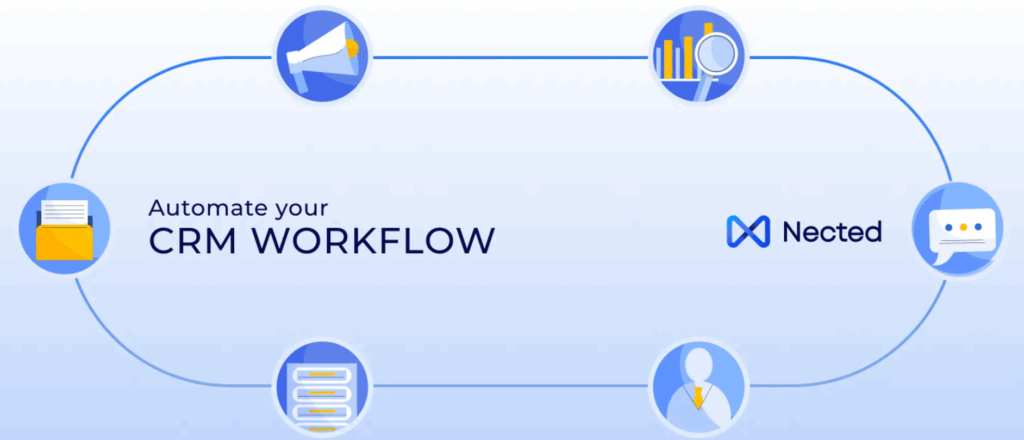
In today’s fast-paced business environment, efficiency is key to staying competitive. Managing customer relationships manually can lead to missed opportunities, disorganized data, and wasted time. Smart CRM systems offer a streamlined solution by automating routine tasks, organizing client information, and providing real-time insights. These intelligent platforms adapt to user behavior, prioritize leads, and integrate seamlessly with existing tools, enhancing productivity across teams.
By simplifying workflows, smart CRM technology empowers businesses to focus on building stronger relationships and driving growth. Discover how leveraging automation and data intelligence can transform your customer management process and boost operational effectiveness.
- Simplify Your Workflow Using Smart CRM
- Streamline Your Workflow with an Intelligent CRM Solution
- How can a smart CRM streamline and simplify your workflow efficiently?
- Centralized Data Management for Unified Customer Insights
- Automation of Routine Tasks to Boost Productivity
- Enhanced Collaboration Across Teams and Departments
- How to streamline workflows with an intelligent CRM system?
- Automate Routine Tasks to Increase Efficiency
- Integrate Data Across Departments for a Unified View
- Leverage AI-Powered Insights for Proactive Decision-Making
- What are the 5 key CRM process steps to streamline your workflow efficiently?
- 1. Lead Capture and Data Collection
- 2. Lead Segmentation and Qualification
- 3. Workflow Automation and Task Management
- Frequently Asked Questions
- Frequently Asked Questions
Simplify Your Workflow Using Smart CRM
Modern businesses thrive on efficiency, and a smart Customer Relationship Management (CRM) system is a powerful tool to streamline operations. By centralizing customer data, automating routine tasks, and providing actionable insights, a smart CRM eliminates redundant processes and enhances team collaboration.
Whether you're managing sales pipelines, tracking marketing campaigns, or supporting customers, an intelligent CRM integrates seamlessly into daily operations, ensuring that every interaction is meaningful and time is used productively. With smart automation and real-time analytics, businesses can focus more on building relationships and less on administrative overhead.
Automate Repetitive Tasks for Greater Efficiency
Automation is one of the most valuable features of a smart CRM, enabling teams to offload time-consuming, repetitive activities such as data entry, email follow-ups, and task assignments. By setting up rules and triggers, businesses can ensure that leads are automatically scored, assigned to the right sales representative, and nurtured through personalized workflows. This not only reduces human error but also accelerates response times, improving the customer experience.
With routine operations handled automatically, employees can dedicate their efforts to higher-value activities like strategic planning and customer engagement.
| Task | Manual Process Time | Automated Process Time | Time Saved |
|---|---|---|---|
| Email Follow-ups | 2 hours/week | 5 minutes/week | 1h 55m |
| Data Entry | 3 hours/week | 20 minutes/week | 2h 40m |
| Lead Assignment | 1 hour/week | Instant | 1h |
Centralize Customer Data for Unified Access
A smart CRM acts as a single source of truth by consolidating contact information, communication history, purchase behavior, and support tickets into one secure platform. This unified view ensures that sales, marketing, and customer service teams have access to consistent and up-to-date data, eliminating silos and miscommunication. For example, a sales representative can instantly see previous support interactions, enabling more informed conversations.
Centralization also enhances data security and compliance, as access can be controlled and tracked. With all customer insights in one place, businesses can deliver more personalized experiences and make data-driven decisions with confidence.
Enhance Collaboration Across Teams
Effective collaboration is essential for maintaining a smooth workflow, and a smart CRM fosters seamless communication between departments. Features like shared calendars, task assignments, and real-time updates allow teams to stay aligned on customer accounts and project progress. For instance, marketing can notify sales when a lead engages with a campaign, enabling timely outreach. Managers can monitor team performance through dashboards and provide feedback instantly.
By breaking down departmental barriers, a CRM encourages transparency and accountability, leading to faster decision-making and improved customer satisfaction. Collaboration tools embedded within the CRM ensure that everyone works from the same playbook, reducing confusion and duplication of efforts.
Streamline Your Workflow with an Intelligent CRM Solution
How can a smart CRM streamline and simplify your workflow efficiently?
Centralized Data Management for Unified Customer Insights
A smart CRM streamlines workflow by consolidating customer information from multiple channels—such as email, social media, phone calls, and website interactions—into a single, accessible platform.
This unified view eliminates the need to switch between disparate systems, reducing redundancies and minimizing errors caused by inconsistent data entry. With all customer history, preferences, and communication logs in one place, team members can make informed decisions quickly and maintain continuity across departments.
- Stores all customer interactions in a single database, ensuring everyone accesses the most up-to-date information.
- Automatically syncs data from various touchpoints like email campaigns, live chat, and support tickets.
- Reduces duplicate entries and data fragmentation, improving accuracy and minimizing administrative overhead.
Automation of Routine Tasks to Boost Productivity
Smart CRM systems use automation to handle repetitive, time-consuming tasks such as lead assignment, follow-up reminders, data entry, and report generation. By setting predefined rules and triggers, businesses can ensure consistent follow-ups and faster response times without requiring manual input.
This not only accelerates sales cycles but also frees up employees to focus on higher-value activities like relationship-building and strategic planning.
- Automatically assigns incoming leads to the appropriate sales representative based on criteria like region or product interest.
- Sends personalized follow-up emails and schedules callbacks at optimal times using behavioral triggers.
- Generates real-time reports on sales performance, customer engagement, and pipeline status without manual compilation.
Enhanced Collaboration Across Teams and Departments
A smart CRM fosters seamless collaboration by enabling different departments—such as sales, marketing, and customer support—to share insights and coordinate efforts within the same environment.
Team members can track the status of customer requests, comment on shared records, and stay aligned on goals, which reduces miscommunication and accelerates resolution times. This cross-functional transparency ensures a consistent customer experience throughout the journey.
- Allows sales and marketing teams to align on lead scoring and campaign results through shared dashboards.
- Enables support staff to view prior sales interactions, preventing customers from repeating information.
- Facilitates internal task delegation and progress tracking through integrated project management features.
How to streamline workflows with an intelligent CRM system?
Automate Routine Tasks to Increase Efficiency
Intelligent CRM systems utilize automation to eliminate time-consuming manual processes, allowing teams to focus on higher-value activities. By setting up predefined rules and triggers, repetitive tasks such as data entry, follow-up emails, appointment scheduling, and lead scoring can be handled automatically. This not only reduces human error but also ensures that no critical step in the customer journey is missed.
Automated workflows adapt dynamically based on customer behavior and interactions, enabling timely and personalized communication. Additionally, automation frees up sales and support teams to dedicate more effort to building relationships and closing deals.
- Configure automated email sequences triggered by specific customer actions, such as downloading a whitepaper or abandoning a cart.
- Use intelligent routing to assign leads to the appropriate sales representative based on geography, product interest, or lead score.
- Set up task reminders and follow-up alerts to ensure consistent engagement with prospects and existing clients.
Integrate Data Across Departments for a Unified View
One of the key advantages of an intelligent CRM is its ability to consolidate customer information from various touchpoints into a single, comprehensive profile. When sales, marketing, and customer service teams access the same real-time data, alignment improves and response times decrease. Integration with email platforms, social media, ERP systems, and support tools ensures that every interaction is recorded and visible across departments.
This unified approach prevents duplication of effort, enhances personalization, and allows teams to anticipate customer needs more effectively. With AI-driven insights, the CRM can also suggest next-best actions based on historical and behavioral data.
- Connect your CRM with marketing automation tools to track campaign performance and customer engagement across channels.
- Synchronize customer service tickets and chat logs with CRM records to provide support teams with full context during interactions.
- Enable bidirectional sync between the CRM and calendar/email systems to automatically log communications and schedule follow-ups.
Leverage AI-Powered Insights for Proactive Decision-Making
Intelligent CRM systems are equipped with artificial intelligence and machine learning capabilities that analyze vast amounts of customer data to uncover patterns and predict future behavior. These insights help organizations make informed decisions by forecasting sales trends, identifying at-risk customers, and recommending optimal engagement strategies.
Predictive analytics can prioritize leads with the highest conversion potential, while sentiment analysis monitors customer feedback to detect satisfaction levels in real time. By acting on these proactive insights, businesses can stay ahead of customer needs and adjust workflows dynamically to improve outcomes.
- Use predictive lead scoring to rank prospects based on their likelihood to convert, allowing sales teams to focus efforts on high-potential opportunities.
- Monitor customer sentiment through AI analysis of support tickets, emails, and social media interactions to identify potential churn risks early.
- Generate customized sales forecasts using historical data and current pipeline information to improve resource planning and goal setting.
What are the 5 key CRM process steps to streamline your workflow efficiently?
1. Lead Capture and Data Collection
Efficient CRM workflows begin with effective lead capture and accurate data collection. This foundational step ensures that all potential customer information is gathered systematically from various touchpoints such as websites, social media, email campaigns, and events. Without a structured method to collect this data, businesses risk losing valuable leads or creating duplication in records.
- Integrate web forms, live chat, and landing pages with your CRM to automatically capture visitor details.
- Utilize tracking tools to collect behavioral data, such as page views and downloads, to enrich lead profiles.
- Standardize data entry formats (e.g., phone numbers, email addresses) to maintain consistency and improve data quality across the system.
2. Lead Segmentation and Qualification
Once leads are collected, the next step is to categorize and evaluate them based on predefined criteria. Lead segmentation allows businesses to tailor communication strategies according to demographics, behavior, or engagement levels. Qualification further refines this process by identifying which leads are sales-ready.
- Apply tagging or labeling within the CRM to group leads by industry, location, or interests for targeted outreach.
- Use lead scoring models based on engagement (e.g., email opens, demo requests) to prioritize high-potential prospects.
- Set up automated workflows to assign qualified leads to the appropriate sales representatives, reducing response time.
3. Workflow Automation and Task Management
Automation is a crucial element in streamlining CRM processes. By automating repetitive tasks, teams can focus more on relationship-building and strategic activities instead of manual data handling. Task management within a CRM ensures accountability and timely follow-ups.
- Set up automated email sequences triggered by user actions, such as downloading a whitepaper or visiting a pricing page.
- Create reminder systems for follow-up calls, meetings, or contract renewals to ensure no opportunity is missed.
- Use pipeline management features to visualize deal stages and assign tasks to team members based on predefined rules.
Leave a Reply