Boost your sales process with CRM
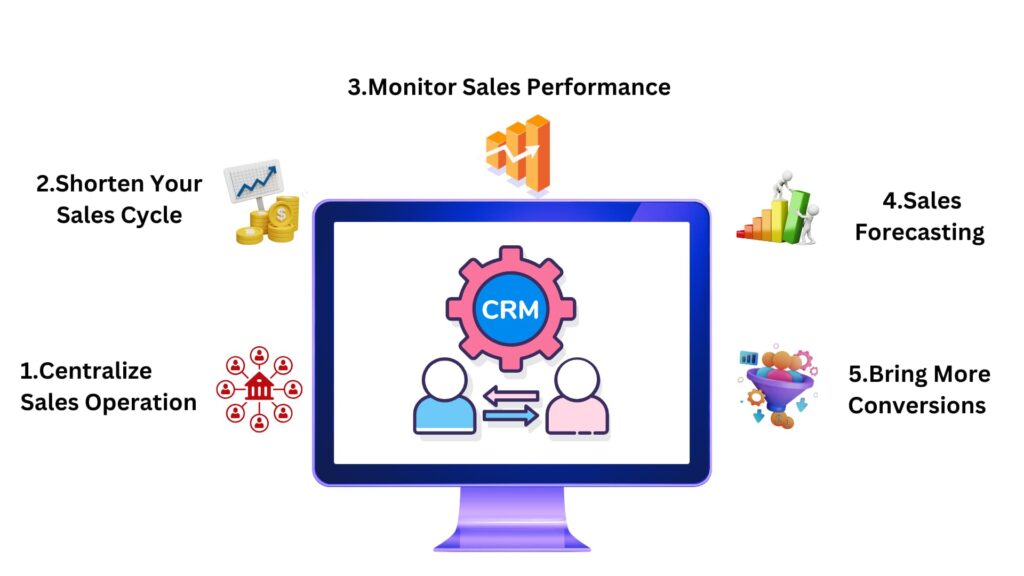
In today’s competitive business landscape, an efficient sales process is essential for sustainable growth. Customer Relationship Management (CRM) systems have emerged as powerful tools to streamline sales operations, enhance customer interactions, and drive revenue.
By centralizing contact information, tracking communication history, and automating routine tasks, CRM platforms empower sales teams to focus on what matters most—closing deals. With real-time insights and data-driven analytics, organizations can identify opportunities, forecast accurately, and personalize customer experiences. Integrating CRM into your sales strategy isn’t just an option; it’s a strategic advantage that boosts productivity, improves customer satisfaction, and maximizes long-term profitability.
- Boost Your Sales Process with CRM: Streamline, Track, and Close More Deals
- Enhance Your Sales Process with an Effective CRM Strategy
- How can CRM streamline your sales process to boost revenue?
- Centralized Customer Data for Faster Decision-Making
- Automation of Repetitive Sales Tasks
- Improved Sales Forecasting and Pipeline Management
- How Can the 3-3-3 Rule Enhance Your Sales Process with CRM?
- Streamlining Lead Prioritization with the 3-3-3 Rule
- Enhancing CRM Data Discipline and Accuracy
- Driving Consistent Sales Activity and Follow-Up
- How can CRM enhance and streamline your sales process?
- Centralized Customer Data Management
- Automated Sales Workflow and Task Management
- Improved Sales Forecasting and Reporting
- What is the 2 2 2 rule in sales and how can CRM optimize its implementation?
- Understanding the Components of the 2 2 2 Rule
- How CRM Systems Enable Consistent Follow-Up and Tracking
- Enhancing Targeting and Personalization Through CRM Data
- Frequently Asked Questions
- Frequently Asked Questions
Boost Your Sales Process with CRM: Streamline, Track, and Close More Deals
Integrating a Customer Relationship Management (CRM) system into your sales strategy empowers organizations to significantly enhance efficiency, visibility, and performance across the entire sales lifecycle. A modern CRM centralizes customer data, automates routine tasks, and offers real-time insights into sales pipelines, enabling sales teams to focus on building relationships and closing deals rather than administrative overhead.
From lead capture to post-sale follow-ups, CRM platforms ensure no opportunity slips through the cracks. By leveraging data-driven decision-making, sales managers can identify bottlenecks, forecast revenue more accurately, and coach their teams based on actual performance metrics. Whether you're a small business or a large enterprise, adopting a CRM system is a strategic move that directly contributes to accelerating sales cycles and increasing conversion rates.
Centralize Customer Data for a 360-Degree View
A key advantage of using a CRM is the ability to consolidate all customer interactions—emails, calls, meeting notes, purchase history, and support tickets—into a single, accessible platform. This creates a complete 360-degree view of each customer, allowing sales representatives to personalize their communication and anticipate needs effectively. No longer do team members need to dig through scattered spreadsheets or email threads to understand a client’s journey.
With real-time access to updated customer profiles, sales professionals can build stronger relationships, deliver relevant solutions, and avoid redundant or conflicting messages. This level of organization enhances trust and positions your team as attentive and informed, increasing the chances of successful engagement and repeat business.
| Data Type | Benefit for Sales Teams |
|---|---|
| Contact Information | Ensures accurate and easy access to key decision-makers and stakeholders. |
| Interaction History | Provides context for ongoing conversations and avoids repetition. |
| Purchase Behavior | Enables upselling and cross-selling opportunities based on past decisions. |
| Lead Source | Helps identify the most effective marketing channels for future planning. |
Automate Repetitive Tasks to Increase Sales Productivity
Sales teams often waste valuable time on manual data entry, scheduling follow-ups, or sending repetitive emails. A CRM eliminates these inefficiencies by automating routine tasks such as lead assignment, activity reminders, and email sequences. Automated workflows ensure that every lead receives timely attention, improving response rates and overall customer experience.
For example, when a new lead comes in from your website, the CRM can instantly assign it to the right sales rep, trigger a personalized welcome email, and schedule a follow-up call—all without human intervention. This level of automation frees up time for reps to focus on high-value activities like negotiation and relationship building, directly boosting productivity and shortening sales cycles.
| Automated Task | Impact on Sales Process |
|---|---|
| Email Sequences | Maintains consistent communication with prospects while reducing manual effort. |
| Task & Reminder Alerts | Reduces missed follow-ups and keeps deals moving forward. |
| Lead Scoring & Routing | Ensures high-potential leads are quickly directed to the best-qualified reps. |
| Report Generation | Provides managers with real-time performance insights without manual data collection. |
Enhance Sales Forecasting with Real-Time Analytics
Accurate sales forecasting is critical for strategic planning, resource allocation, and revenue prediction. CRM systems offer powerful real-time analytics and reporting tools that transform raw sales data into actionable insights.
Managers can track KPIs such as conversion rates, average deal size, and sales cycle length across different segments, regions, or team members. Dashboards display up-to-the-minute pipeline health, highlighting which deals are progressing and which are stalled. This visibility enables timely interventions and more informed decision-making. Furthermore, historical data stored in the CRM allows for trend analysis, helping organizations refine their strategies and set realistic, data-backed sales targets.
| Analytics Feature | Sales Forecasting Benefit |
|---|---|
| Pipeline Reports | Visualizes deal stages and identifies bottlenecks in the sales funnel. |
| Conversion Rate Tracking | Measures effectiveness at each stage and forecasts close probabilities. |
| Team Performance Metrics | Highlights top performers and areas needing coaching or support. |
| Forecasting Models | Uses historical data to predict future revenue with greater accuracy. |
Enhance Your Sales Process with an Effective CRM Strategy
How can CRM streamline your sales process to boost revenue?
A CRM (Customer Relationship Management) system streamlines the sales process by centralizing customer data, automating routine tasks, enhancing team collaboration, and providing actionable insights through analytics.
By organizing every interaction with prospects and existing customers in one accessible platform, sales teams can work more efficiently, reduce manual errors, and focus on high-value activities. This leads to shorter sales cycles, improved conversion rates, and ultimately, higher revenue generation.
Centralized Customer Data for Faster Decision-Making
- With a CRM, all customer information—such as contact details, communication history, purchase behavior, and preferences—is stored in a single, easily accessible database, eliminating data silos across departments.
- Sales representatives can quickly retrieve relevant information during client interactions, allowing for more personalized and informed conversations that build trust and credibility.
- Managers gain real-time visibility into customer trends and sales pipelines, enabling data-driven decisions on resource allocation, pricing strategies, and targeted campaigns.
Automation of Repetitive Sales Tasks
- CRMs automate routine activities like data entry, follow-up email reminders, appointment scheduling, and lead assignment, reducing the administrative burden on sales teams.
- Automated workflows ensure that no leads fall through the cracks by triggering specific actions based on customer behavior, such as sending a follow-up message after a website visit or demo request.
- By minimizing manual processes, sales reps gain more time to focus on building relationships and closing deals, directly increasing productivity and revenue potential.
Improved Sales Forecasting and Pipeline Management
- CRM systems track each lead’s progress through customizable sales stages, providing a clear visual representation of the sales pipeline and helping teams prioritize high-potential opportunities.
- Advanced analytics and reporting tools allow sales managers to forecast future revenue with greater accuracy by analyzing historical data, win rates, and average deal sizes.
- Real-time performance dashboards highlight bottlenecks in the sales process, enabling timely interventions such as additional training or lead re-engagement strategies to accelerate conversions.
How Can the 3-3-3 Rule Enhance Your Sales Process with CRM?
Streamlining Lead Prioritization with the 3-3-3 Rule
The 3-3-3 rule can significantly improve how sales teams prioritize leads within a CRM system by imposing structure on what might otherwise be a chaotic pipeline. According to the rule, sales professionals should aim to close three deals per week, from a pipeline of three qualified prospects, by engaging in three new meaningful conversations daily. This framework forces a disciplined approach to lead management, ensuring that only high-potential prospects are advanced in the CRM workflow.
- By limiting focus to three active prospects at a time, sales reps avoid overloading the CRM with unqualified leads, improving data quality and relevance.
- Daily outreach efforts targeting three new conversations ensure consistent top-of-funnel activity, which CRM analytics can track and report on for performance insights.
- Setting a weekly target of three closed deals encourages sales managers to use CRM forecasting tools more accurately, aligning team goals with measurable outcomes.
Enhancing CRM Data Discipline and Accuracy
Adherence to the 3-3-3 rule fosters better data hygiene within the CRM by aligning daily activity with structured entry and updating protocols. When sales teams commit to initiating three new conversations daily, each interaction must be logged promptly to maintain visibility and accountability. This regular input strengthens the reliability of the CRM as a real-time decision-making tool.
- Consistent daily logging of three new contacts ensures that CRM records reflect up-to-date engagement levels, enabling sales managers to identify trends and intervene when necessary.
- Focusing on just three qualified prospects at a time reduces data clutter, helping reps keep opportunity stages accurate and activity timelines clear within the CRM.
- The goal of closing three deals weekly creates a feedback loop where post-sale updates and win/loss reasons are more likely to be recorded, enriching the CRM’s historical data for future strategy refinement.
Driving Consistent Sales Activity and Follow-Up
One of the core benefits of integrating the 3-3-3 rule with CRM usage is the reinforcement of consistent, repeatable sales behaviors. The rule’s emphasis on three daily outreach tasks ensures that sales activity remains steady, and the CRM serves as both a planner and a tracker for these actions. This synergy increases follow-up reliability and reduces the risk of prospects falling through the cracks.
- Scheduling three daily touchpoints—calls, emails, or meetings—within the CRM calendar ensures that follow-ups are automated and prioritized, reducing manual oversight.
- The CRM can trigger reminders and task lists based on the 3-3-3 structure, helping reps maintain momentum with each of their three active prospects.
- By analyzing which types of daily interactions lead to progress, teams can use CRM reporting to refine their outreach strategies and double down on the most effective communication methods.
How can CRM enhance and streamline your sales process?
Centralized Customer Data Management
A CRM system enhances the sales process by consolidating all customer information into a single, accessible platform. This centralization ensures that sales representatives have immediate access to detailed customer histories, including past interactions, purchase behavior, communication preferences, and ongoing opportunities.
With this comprehensive view, sales teams can personalize their outreach, anticipate client needs, and avoid redundant or conflicting communications. Consistent and informed interactions build stronger relationships and increase the likelihood of closing deals efficiently.
- Stores contact details, interaction logs, and transaction records in one secure location accessible to authorized team members
- Enables quick retrieval of customer data during meetings or follow-ups, reducing delays and improving responsiveness
- Eliminates data silos by integrating information from emails, calls, social media, and other touchpoints
Automated Sales Workflow and Task Management
CRM systems streamline sales operations by automating routine tasks and guiding representatives through structured workflows. Activities such as lead assignment, follow-up reminders, data entry, and status updates can be automated, reducing manual errors and increasing productivity. Sales managers can set predefined pipelines and stages, ensuring consistency in how deals are managed across the team. Automation frees up valuable time for sales professionals to focus on high-value activities such as building relationships and negotiating deals rather than administrative work.
- Automates lead routing based on predefined criteria like geography, product interest, or lead score
- Schedules follow-up tasks and sends alerts to ensure timely customer engagement
- Tracks progress through sales stages and generates real-time reports on team performance
Improved Sales Forecasting and Reporting
CRM platforms provide powerful analytical tools that help sales teams predict outcomes and make data-driven decisions. By capturing detailed information at every stage of the sales cycle, CRMs enable accurate forecasting of revenue, conversion rates, and deal closures. Managers can generate customized reports to assess team performance, identify bottlenecks, and adjust strategies accordingly. Enhanced visibility into pipeline health allows organizations to allocate resources more effectively and respond proactively to changing market conditions.
- Aggregates real-time data from active deals to generate reliable revenue forecasts
- Identifies trends and patterns in sales performance across regions, products, or time periods
- Offers dashboard views that highlight key metrics such as win rates, average deal size, and sales cycle length
What is the 2 2 2 rule in sales and how can CRM optimize its implementation?
The 2 2 2 rule in sales is a time management strategy designed to help sales professionals maintain consistent outreach and build strong relationships with prospects and clients. It involves dedicating two hours per day, for two days per week, to engage with two different customer groups: existing clients and new prospects. This structured approach ensures a balanced focus on both acquisition and retention, which are crucial for sustainable revenue growth. By allocating specific time blocks, sales teams avoid reactive work patterns and prioritize proactive engagement. When combined with a Customer Relationship Management (CRM) system, the 2 2 2 rule becomes significantly more effective, as CRMs centralize data, automate tasks, and provide timely insights to enhance outreach precision and follow-up efficiency.
Understanding the Components of the 2 2 2 Rule
- The first 2 refers to two hours each day dedicated exclusively to outreach activities such as making calls, sending emails, or scheduling meetings. This daily block ensures consistent momentum in communication efforts, preventing long gaps that could lead to lost opportunities or weakened client relationships.
- The second 2 indicates that these dedicated two-hour sessions should occur on two specific days each week. Choosing fixed days helps create a routine, reduces decision fatigue, and allows sales representatives to shield this time from other responsibilities like reporting or internal meetings.
- The final 2 signifies the division of effort between two key customer segments: nurturing existing clients and prospecting new leads. By allocating time to both groups, sales professionals maintain client satisfaction and loyalty while simultaneously expanding their pipeline for future growth.
How CRM Systems Enable Consistent Follow-Up and Tracking
- CRMs support the 2 2 2 rule by logging every interaction—emails, calls, and meetings—in a centralized database, ensuring that no follow-up is missed during the two-hour outreach windows. Sales reps can quickly review past communications and continue conversations seamlessly, even across devices or team members.
- Automated reminders and task scheduling within CRM platforms help sales professionals adhere strictly to their two-day engagement schedule. Alerts for upcoming follow-ups or renewal dates ensure that the two-hour blocks are used efficiently and purposefully.
- With CRM analytics, managers can monitor adherence to the 2 2 2 framework by reviewing activity logs and engagement rates. This visibility enables timely coaching and ensures accountability, improving overall team discipline in executing the rule.
Enhancing Targeting and Personalization Through CRM Data
- During the two-hour outreach sessions, CRM data allows sales reps to personalize messages based on customer history, preferences, and past purchases. This level of customization increases response rates and strengthens trust, especially when engaging existing clients on retention-focused days.
- CRMs enable segmentation of contacts into specific lists—such as high-value clients or cold leads—helping salespeople direct their two days of effort toward the most strategic segments. This ensures that time is spent on high-impact activities aligned with business goals.
- Integration with communication tools like email and telephony within CRM platforms streamlines outreach, allowing reps to execute calls and send tailored messages without switching applications. This efficiency maximizes productivity during the allocated two-hour periods, enhancing both quantity and quality of interactions.
Leave a Reply